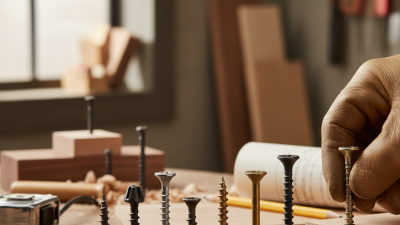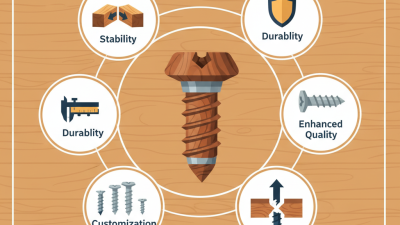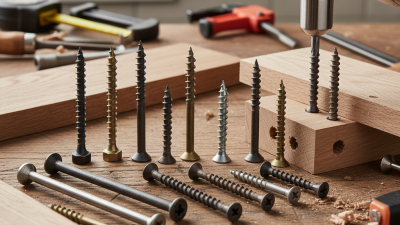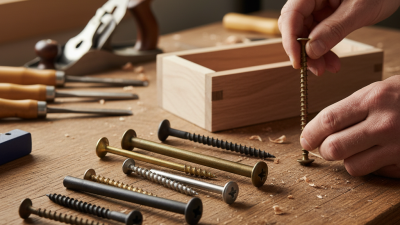
Understanding the various types of wood screws is essential for both DIY enthusiasts and professionals. According to the Wood Products Council, around 70% of all construction projects require the use of wood screws for framing, cabinetry, and finishing. This indicates their critical role in ensuring structural integrity. Various wood screw types offer different benefits, making it imperative to choose the right one for specific tasks.
Wood screws come in numerous shapes, sizes, and materials. Each type serves unique purposes and presents distinct advantages. For instance, screws designed specifically for hardwood provide superior holding power, enhancing longevity. However, the wrong choice can lead to issues like cam-out or stripped heads. Industry reports suggest that nearly 25% of fastening failures trace back to improper screw selection.
Being informed about wood screw types can help you avoid common pitfalls. It increases efficiency, saves time, and reduces costs. By exploring the top 10 wood screw types, you not only enhance your skills but also ensure that your projects stand the test of time.
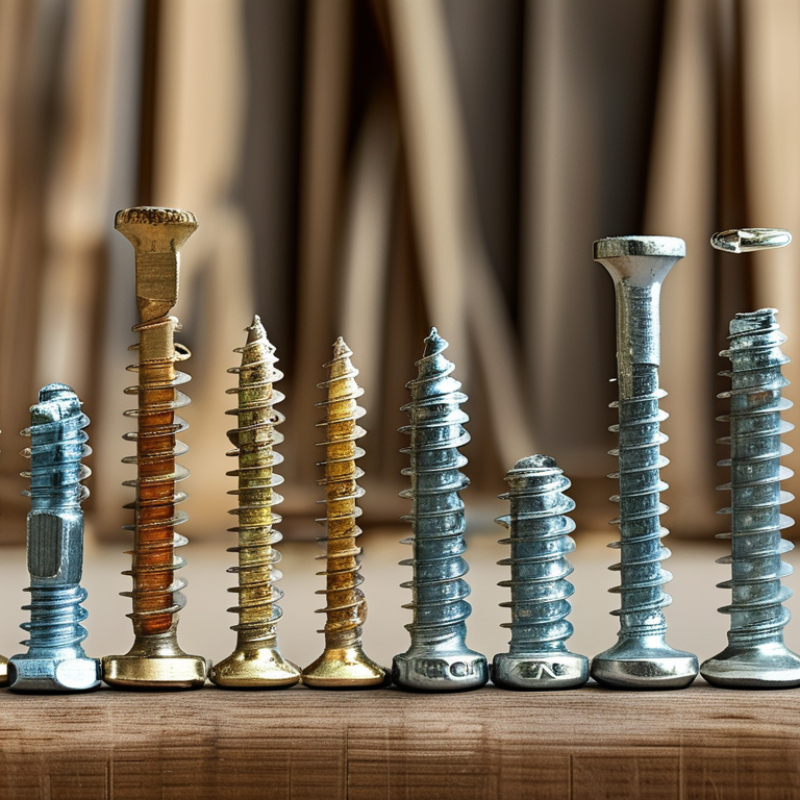
When working with wood, choosing the right screw is crucial. Various wood screws are designed for specific applications. From flat heads to pan heads, each type serves its own purpose. Understanding these differences can significantly impact the quality of your project.
For instance, flat head screws are ideal for applications where a flush finish is necessary. They are often used in cabinetry. Meanwhile, round head screws provide a more decorative look, making them suitable for visible joints. It's essential to consider the screw's material as well. Stainless steel screws offer corrosion resistance, while coated screws prevent rust.
Tips: Use pilot holes to prevent splitting wood. Pre-drilling also allows for easier screw insertion. When working with hardwood, choose screws with coarse threads for better grip. Remember, not every screw is perfect for every project. It’s okay to experiment and learn from each attempt.
When choosing wood screws, understanding the common materials used is essential.
Steel is the most common choice.
It’s strong and durable. However, steel is prone to rust if not treated.
Using coated steel is an option to enhance corrosion resistance.
This is crucial for outdoor projects.
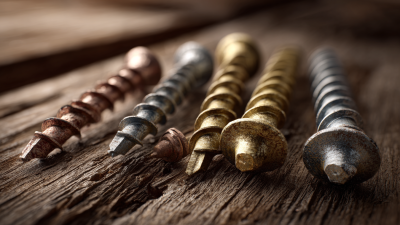
Brass is another popular material. It’s softer than steel, making it ideal for delicate wood types.
Brass screws add a decorative touch with their attractive finish.
However, they may not hold up under heavy loads.
For high-strength needs, stainless steel is the go-to.
Its resistance to rust is fantastic.
This makes it suitable for both indoor and outdoor applications, although it can be more expensive.
Plastic screws are also available. They are lightweight and resistant to moisture.
However, they lack the strength of metal screws. In certain applications, they perform adequately, but their limits should be considered.
Understanding these materials helps in making informed decisions when selecting wood screws.
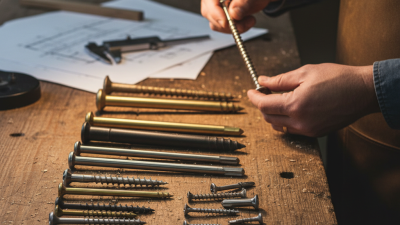
When selecting wood screws, understanding their features is crucial. Each type offers distinct benefits and functions. For instance, coarse-thread screws grip wood effectively. They are ideal for softwoods, providing strong holding power. Fine-thread screws, on the other hand, work well with hardwoods. They create a tighter connection and are less likely to split the wood.
Deck screws are designed for outdoor use. They resist corrosion and are often coated for durability. Drywall screws, typically black, have sharp points to penetrate materials easily. However, their misuse can lead to breakage, especially in hardwoods. Lag screws are heavy-duty and used for fastening large structures. Their length and thickness require proper drilling for effective installation.
Some screws have self-tapping features. These can save time but might not perform well in all applications. A common mistake is selecting the wrong type for specific jobs. Careful consideration of threading, dimensional requirements, and material compatibility is critical. Not all screws fit every project seamlessly. Understanding these details enhances both efficiency and success in woodworking tasks.
Choosing the right wood screw is crucial for any woodworking project. Different screws serve various purposes, and understanding their characteristics can lead to better results. There's more than one type to consider, and each has unique features. For example, if you're working on outdoor furniture, corrosion-resistant screws are a must. On the other hand, traditional wood screws work well for indoor projects.
When selecting screws, pay attention to the material and thread design. Coarse threads grip wood fibers effectively, while fine threads work better in hard materials. The length of the screw also matters—too long or too short can impact the stability of your joint. Also, consider head styles: flat, round, or even square heads can change how the finished product looks.
Though you may instinctively grab the first screws you see, taking the time to reflect is vital. Research different types and their applications. Not all screws are created equal, and a simple mistake can lead to structural problems. It's beneficial to consult experts or reliable sources. This thoughtful approach will enhance your project's success.
When selecting wood screws, understanding proper installation and usage is crucial. One critical tip is to choose the right screw length. A general rule is that the screw should penetrate the base wood by at least two-thirds of its length. This ensures a strong grip. However, achieving the ideal length can be tricky. Overshooting can split the wood, while too short leaves a weak hold.
Pre-drilling holes is also essential. This prevents splitting and allows for smoother driving of the screws. A drill bit slightly smaller than the screw diameter is ideal. Some may skip this step, thinking it’s unnecessary. Yet, a small crack can weaken the entire project. Ensuring a straight insert matters! Misalignment can lead to a poor finish and structural instability. Keep screws aligned and avoid applying excessive force; it can strip the drive.
Lastly, consider the material and coating of the screws. Different projects may require rust-proof screws or those that resist corrosion. Ignoring this can lead to failures. Not choosing wisely can sabotage your hard work. Remember that testing a few screws on scrap wood may help refine your technique. Focusing on these details leads to successful wood projects.
| Screw Type | Description | Common Uses | Installation Tips |
|---|---|---|---|
| Wood Screw | Standard screws for general wood applications | Furniture, cabinetry, and general woodworking | Pre-drill holes to avoid splitting |
| Deck Screw | Corrosion-resistant screws for outdoor use | Decking and outdoor furniture | Use of a screw gun for consistent depth |
| Particle Board Screw | Designed for particle board and MDF | Cabinet making and flat-pack furniture | Avoid over-tightening to prevent damage |
| Drywall Screw | Specially designed for attaching drywall | Drywall installation and renovation | Use a drywall gun for efficient installation |
| Lag Screw | Heavy-duty screws for structural applications | Decking, supports, and large wooden structures | Pre-drill pilot holes for easier installation |
| Woodworking Screw | Designed specifically for woodworking | Fine furniture and detailed wood projects | Consider using glue for added strength |
| Countersunk Screw | Screws designed to sit flush with the surface | Fine woodworking and cabinetry | Use the right size countersink bit |
| Self-tapping Screw | Screws that create their own hole | Metal and composite materials | Ensure alignment before driving the screw |
| Screw Hook | Screws with a hook for hanging | Hanging items on walls | Install into wall studs for support |